Taste of Time: How Gyeongju’s Food Tells Korea’s Story
Gyeongju isn’t just ancient temples and royal tombs—its flavors are history on a plate. I never expected kimchi steamed with mountain herbs or soy sauce aged for years in courtyard jars. Every bite connects you to centuries of tradition. This isn’t fast food; it’s slow, soulful eating rooted in Korea’s first golden age. Let me take you where taste meets time. In this quiet city nestled in the southeastern corner of the Korean Peninsula, the past is not preserved behind glass—it lives in clay pots, wooden spoons, and generations-old fermentation crocks. Here, food is not only nourishment but memory, a sensory archive of the Silla Dynasty’s enduring legacy. From temple meals to coastal markets, from royal reconstructions to grandmother’s kitchen, Gyeongju offers a rare kind of culinary journey—one where every dish tells a story, and every flavor carries the weight of time.
The Living Kitchen of Korea’s Ancient Capital
Gyeongju, once the capital of the Silla Kingdom that ruled from 57 BCE to 935 CE, stands today as a living museum of Korean civilization. But unlike cities that relegate history to monuments and museums, Gyeongju breathes its heritage through daily life—especially through food. The city’s culinary traditions are not staged for tourists; they are lived, practiced, and passed down in homes, temples, and village kitchens. This continuity is not accidental. It is rooted in geography, seasonality, and a deep cultural reverence for balance and harmony. Local ingredients—such as sun-dried sea salt harvested from the tidal flats near Ulsan, wild perilla leaves gathered from the slopes of Tohamsan Mountain, and rice grown in the fertile Nakdong River basin—form the foundation of a cuisine shaped by nature and time.
Walking through a residential neighborhood in early morning, one might catch the earthy aroma of meju blocks—fermented soybean bricks—drying on woven mats under the autumn sun. These will later become doenjang (soybean paste), ganjang (soy sauce), and gochujang (fermented chili paste), the holy trinity of Korean fermentation. The process, unchanged for centuries, requires patience and instinct. Families still perform jang-making rituals each winter, a practice recognized by UNESCO as an Intangible Cultural Heritage of Humanity. The sound of stone mills grinding soaked rice for tteok (rice cakes) echoes from backyards, a reminder that in Gyeongju, food is not purchased—it is cultivated, prepared, and shared with intention.
What makes Gyeongju’s food culture distinct is its authenticity. Unlike the stylized 'heritage cuisine' served in themed restaurants elsewhere, meals here are not performances. A bowl of miyeok-guk (seaweed soup) served on a family’s ancestral memorial day is the same soup a grandmother would make for her grandchildren on a rainy afternoon. This seamless integration of food into ritual, memory, and daily rhythm reveals a profound truth: in Gyeongju, eating is an act of continuity.
Temple Cuisine: Simplicity with Spiritual Depth
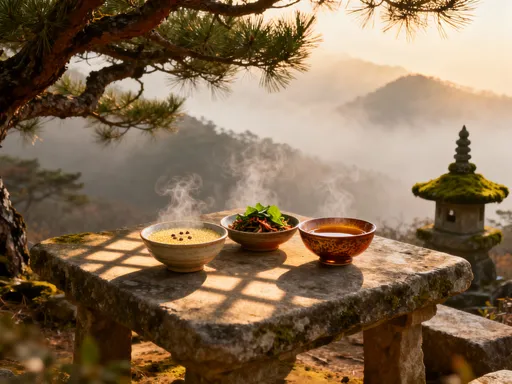
Nestled in the pine-covered hills surrounding Gyeongju, Bulguksa Temple and the hermitage of Seokguram stand as masterpieces of Silla Buddhist architecture. Less visible but equally significant is the culinary tradition nurtured within these sacred spaces. Temple cuisine, or barugongyang, is a refined expression of Buddhist principles—non-harm, mindfulness, and gratitude. It is entirely plant-based, avoiding the “five pungent vegetables” (onion, garlic, leek, scallion, and shallot), which are believed to excite the senses and disturb mental clarity. Instead, meals emphasize balance, seasonality, and the natural flavors of ingredients grown in temple gardens or sourced from nearby farms.
A typical temple meal consists of multiple small dishes: seasoned namul (blanched and seasoned wild greens), jeon (savory pancakes made with mushrooms or squash), fermented kimchi, grain-based stews, and a bowl of brown rice. Each element is prepared with minimal processing, preserving nutritional integrity and honoring the life of the plant. The cooking process itself is meditative. Monks rise before dawn to begin food preparation, chanting sutras as they chop, stir, and simmer. Nothing is wasted; even vegetable peels are composted or used in broths. The act of eating is equally contemplative—done in silence, with gratitude for the labor and lives that made the meal possible.
Visitors can experience this culinary philosophy firsthand through temple stay programs offered at Bulguksa and other nearby monasteries. These programs include participation in morning prayers, meditation sessions, and shared meals. Dining in the temple hall, seated on cushions around low wooden tables, one feels a quiet transformation. The absence of strong flavors invites attention to subtleties: the tang of fermented radish, the nuttiness of roasted sesame, the sweetness of mountain yam. It is not a meal to be rushed, but a ritual to be absorbed. For many participants, the temple meal becomes a turning point—a moment of clarity and calm in an otherwise hurried life.
Market Flavors: Nammun Market as a Taste Archive
If temple cuisine represents the spiritual dimension of Gyeongju’s food culture, Nammun Market embodies its vibrant, communal soul. One of the oldest continuously operating markets in Korea, Nammun has served the city for over a thousand years. Today, it remains a bustling hub where farmers, fishers, and artisans gather daily to sell fresh produce, handmade staples, and regional specialties. Unlike the polished food courts of Seoul or the souvenir-heavy stalls of tourist districts, Nammun offers an unfiltered glimpse into local life. Prices are modest, conversations are warm, and the pace is unhurried—a reflection of Gyeongju’s enduring sense of community.
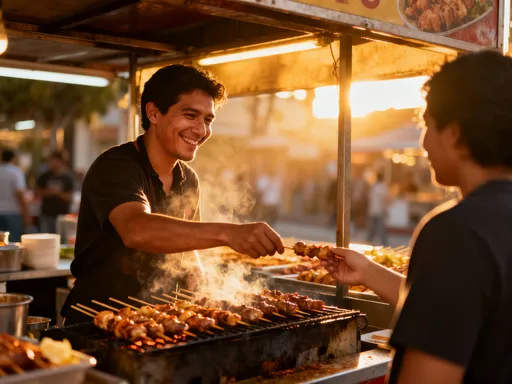
Wandering through the covered alleys, visitors encounter stalls piled high with seasonal ingredients: bundles of wild sesame leaves in spring, baskets of freshly dug ginseng in autumn, and mountains of red peppers in late summer, ready for gochujang production. Food vendors serve hot, handmade jeon—crispy pancakes filled with zucchini, kimchi, or green onion—cooked to order on sizzling griddles. The scent of batter frying in sesame oil draws crowds, especially in the early morning, when locals stop by for a quick, satisfying bite before work.
One of the market’s most beloved offerings is sikhye, a sweet rice beverage made by fermenting cooked rice with malt barley. Served chilled in paper cups, it is slightly fizzy, with a delicate sweetness and soft grains floating at the bottom. Another favorite is gyeran-mari, a rolled omelet layered like a savory Swiss roll, often flavored with carrots and onions. What sets Nammun apart is the longevity of its vendors. Many have run the same stall for decades, some for generations. Recipes are not written down—they are passed orally, refined through years of practice. A 75-year-old woman flipping hotteok (sweet filled pancakes) might tell you her recipe came from her mother, who learned it during the postwar years. These stories, shared between bites, turn a simple meal into a living history lesson.
Royal Remnants: Recreating Silla-Era Tastes
While much of Silla’s culinary knowledge was lost over time, recent efforts have sought to reconstruct the flavors of Korea’s first golden age. Drawing from historical records, archaeological findings, and ancient texts such as the Samguk Sagi (History of the Three Kingdoms), food historians and chefs have begun reviving dishes that might have graced royal banquets over a thousand years ago. These efforts are not about theatrical reenactment but about cultural rediscovery—offering a sensory window into a world before chili peppers, before Chinese noodles, before modern refrigeration.
One such initiative takes place at the Gyeongju National Museum’s cultural experience center, where visitors can sample a reconstructed Silla royal meal. The menu is striking in its simplicity and depth: grilled wild boar marinated in mountain herb juice, millet and red bean porridge, pickled mountain vegetables, and hwang-cha (fermented plum tea). Notably absent are ingredients introduced later in Korean history—especially chili peppers, which only arrived in the 17th century during the Joseon Dynasty. Instead, flavor comes from wild perilla, ginger, fermented fish sauce (eochujang), and aged soybean paste.
These reconstructed meals are served on handmade earthenware, similar to those unearthed from Silla tombs. The dining experience is slow, deliberate, and educational. Staff explain the historical context of each dish, from the hunting practices that supplied game meat to the fermentation techniques used to preserve food through harsh winters. For visitors, the meal is more than a novelty—it is a revelation. It challenges modern assumptions about Korean cuisine as inherently spicy or meat-heavy, revealing instead a tradition rooted in balance, seasonality, and reverence for nature. Some restaurants in Gyeongju now offer Silla-inspired tasting menus, allowing guests to explore this ancient palate in a contemporary setting.
Home Cooking and Generational Wisdom
Perhaps the most intimate way to experience Gyeongju’s food culture is through its home kitchens. Across the city, local families open their doors to travelers through cooking classes and homestay programs. These are not commercialized demonstrations but genuine exchanges, often hosted by grandmothers—known affectionately as halmeoni—who have spent decades perfecting their craft. In a modest kitchen in the Yangdong Folk Village, a halmeoni might begin by showing how to select the freshest perilla leaves from her garden, then demonstrate how to blanch, season, and fold them into delicate jjampong-style rolls.
One popular class involves making kimchi, a process that varies subtly from household to household. The halmeoni explains how the saltiness of the brine, the ripeness of the napa cabbage, and the ratio of radish to red pepper flakes all affect the final flavor. She might share personal tips—like adding a bit of pear for sweetness or using mountain spring water to rinse the vegetables. As participants chop, mix, and pack their kimchi into jars, they are not just learning a recipe; they are participating in a ritual that binds family, season, and memory.
Other classes focus on traditional sweets like hotteok, a chewy pancake filled with brown sugar, nuts, and cinnamon. The dough must be kneaded just right—elastic but not tough—and cooked slowly on a flat griddle until golden. As the fillings melt into a warm, syrupy center, the kitchen fills with a comforting sweetness. These hands-on experiences foster deep connection. Guests leave not only with full stomachs but with recipes, stories, and a renewed appreciation for the quiet artistry of everyday cooking. More importantly, they contribute to the preservation of intangible heritage—each class ensures that these traditions are not lost to time.
Coastal Influences: Seafood from the East Sea
Though Gyeongju is not a coastal city, its proximity to the East Sea profoundly shapes its cuisine. Just a short drive east lies Jeohang Port, a small fishing village where boats return each morning with fresh catches. Octopus, hairtail fish, sea mustard, and sea squirts are brought straight to market, often sold within hours of being pulled from the water. This immediacy defines the region’s seafood dishes—simple, fresh, and deeply flavorful.
In local homes, octopus might be served raw as sannakji, sliced thinly and drizzled with sesame oil and salt, still wriggling slightly on the plate—a dish that emphasizes vitality and freshness. More commonly, it is boiled or grilled and served with a dipping sauce made from soy sauce, vinegar, and gochujang. Hairtail fish, known for its tender flesh and rich flavor, is often pan-fried or stewed with radish and chili paste. Sea mustard, harvested from rocky tidal zones, is blanched and seasoned with garlic and sesame, becoming a refreshing side dish.
The coast also supports Gyeongju’s fermentation traditions. Salt, harvested from solar evaporation ponds along the shoreline, is crucial for making kimchi, soy sauce, and fish sauce. Unlike industrial salt, this hand-harvested variety contains trace minerals that enhance flavor and aid preservation. Families often buy it in bulk during the spring harvest, storing it in cloth sacks for year-round use. The connection between sea and soil, between ocean and pantry, is inseparable in Gyeongju’s culinary worldview. It is a reminder that food does not exist in isolation—it is shaped by land, water, and the rhythms of nature.
Traveler’s Guide: Eating Like a Local – Practical Tips
To truly savor Gyeongju’s culinary heritage, travelers should adopt a slow, intentional approach. Begin early in the day at Nammun Market, where breakfast options like hotteok, tteokbokki, and soy milk with rice cakes offer a delicious introduction to local flavors. Visit between 8:00 and 10:00 a.m., when vendors are most active and ingredients are at their freshest. When dining at a temple, observe silence, remove shoes before entering dining halls, and finish everything on your plate as a sign of respect. Temple stay programs can be booked through the Cultural Corps of Korean Buddhism website and typically last one to two days.
Cooking classes are available through community centers, cultural foundations, and homestay networks. Look for programs certified by the Gyeongju City Tourism Office to ensure authenticity. Most classes last two to three hours and include a meal. For those interested in Silla-era cuisine, the Gyeongju National Museum offers periodic tasting events—check their schedule in advance. When exploring the city, consider renting a bicycle; it allows access to hidden temples, rural farms, and seaside villages unreachable by bus.
Avoid restaurants clustered directly outside major attractions like Bulguksa or Cheomseongdae, as they often cater to mass tourism with standardized menus. Instead, walk a few blocks into residential areas, where family-run eateries serve authentic, home-style dishes. Try one new food each day—a mindful way to expand your palate without overwhelm. Pair your culinary journey with cultural sites: visit the Tomb of King Cheonmachong in the morning, then enjoy a traditional lunch at a nearby village restaurant. Above all, talk to people. A simple “This tastes wonderful—how do you make it?” can lead to an unforgettable conversation and even an invitation into someone’s kitchen.
A Feast That Feeds the Past and Future
Gyeongju’s food is more than sustenance—it is cultural continuity. Every fermented jar, every shared meal, every recipe whispered from grandmother to grandchild carries forward a legacy that spans over a millennium. In a world increasingly dominated by fast, globalized eating, Gyeongju offers a powerful alternative: food that is slow, intentional, and deeply rooted in place. To eat here is not just to taste history, but to become part of it. Each bite connects the diner to generations of farmers, cooks, monks, and families who believed that how we eat reflects who we are. By approaching Gyeongju’s cuisine with respect and curiosity, travelers do more than enjoy a meal—they participate in an act of preservation. In honoring these traditions, we ensure that the taste of time continues to nourish future generations.